
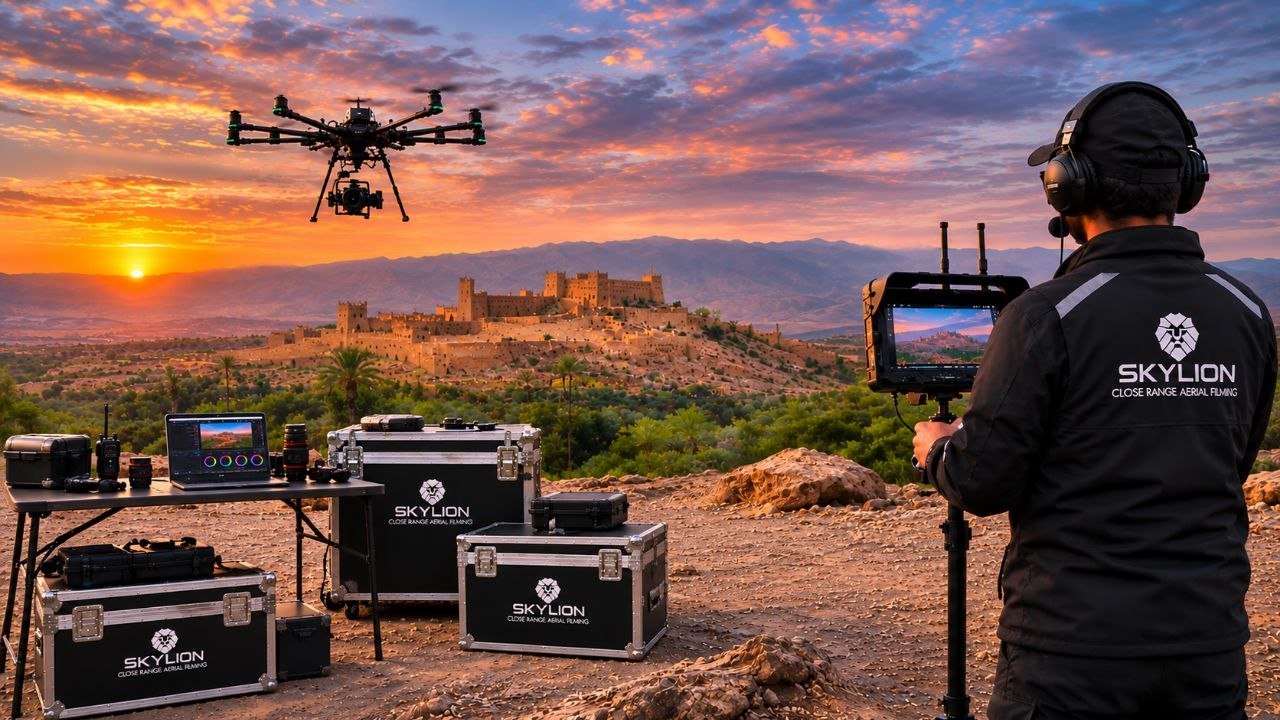
A strong aerial shot is more than a striking view. It should support the scene, respect edit continuity and guide the audience’s eye. Morocco’s varied locations create powerful opportunities when each move is designed around the story.
Start with the intention
Decide what the shot needs to communicate: reveal a location, follow a vehicle, establish scale or create a transition. A simple move executed precisely often serves a scene better than a complex path with no narrative purpose.
Match the platform to the shot
A compact aircraft can suit agile moves and confined spaces. A cinema drone such as the Inspire 3 may fit productions requiring a particular sensor, resolution or professional workflow. Heavier cinema cameras need a suitable aircraft and specialist crew. Confirm payload, lenses, frame rates and delivery format with the cinematographer.
Plan movement, light and continuity
Design a readable path
Set the start and end points, speed, altitude and eyeline. Rehearse on the ground with direction and production, then adapt to wind and terrain.
Think ahead to post-production
Match image settings, frame rate, white balance and color space to the main camera package. Allow handles and safety takes when the schedule permits.
Frequently asked questions
Which drone is right for a film?
It depends on the shot, camera, location and safety constraints, as well as how closely the aerial image must match the main camera.
Can a drone replace a crane or helicopter?
No. It complements other camera tools. Range, payload, movement and operating conditions determine the right solution.
When should we bring in the aerial team?
In pre-production or during technical scouting, so movement, equipment and permissions can be built into the schedule.